
Humans are progressively working towards freedom. In some countries, citizens are granted the right of free speech, the right of women’s voting, the right of religious liberty, and more. However, in some countries, such as China, many foundational civil rights are suppressed, especially the freedom of religion. Since all people deserve the freedom of their own beliefs, the People’s Republic of China should put an end to the inhumane treatment of Muslims and Christians and allow freedom of religion. This is because freedom is a fundamental human right, because religious freedom benefits everyone, and because China’s treatment of Muslims and Christians is morally wrong.
Freedom should not be a privilege; it is a basic human right. It is not something a government simply allows, it is a human right that a government should work to protect. According to Healey in his book Religious Freedom and Discrimination, religious freedom is a freedom acknowledged in several constitutions. He further says, “As human beings endowed with religious freedom, people have the right to contribute to society and serve humanity in accordance with those beliefs.” Even the academic journal Does Religious Freedom Warrant Protection as a Fundamental Human Right speaks of religious freedom as a necessary legal right. In Matthew 19:16-23, a young ruler asked Jesus what it took to go to heaven. Jesus answered that he had to give up everything to follow him. However, when the young ruler did not want to do so, Jesus let him leave. If Jesus, the face of one of the largest religions in the world, doesn’t force himself on people and allows them to make their own choices, shouldn’t the rest of the world do the same? Shouldn’t China do the same?
Yes, China should. When religious freedom is made available, it benefits everyone as it supports the equality of all people, allowing everyone to live peacefully amongst one another without fear of discrimination. In China, many Christians live in fear. In an article from the New York Times, Hernandéz writes about a Christian man in China, referred to as Mr. Gu. On Christmas Eve, he tried to find a safe place to worship and used encrypted chat apps to share information. He had to close his business out of fear in order to avoid the government’s attention because he watched them arrest many of his Christian friends. Without religious freedom, there is widespread fear among religious practitioners that is detrimental to society as a whole. Furthermore, values such as love, generosity, and peace that are important in many religions fund organizations such as The Salvation Army, World Vision, and many more to solve prominent problems in society. Although these organizations do exist in China, the persecution of underground churches and Muslims prevents more organizations like these from developing. Religious freedom serves everyone.
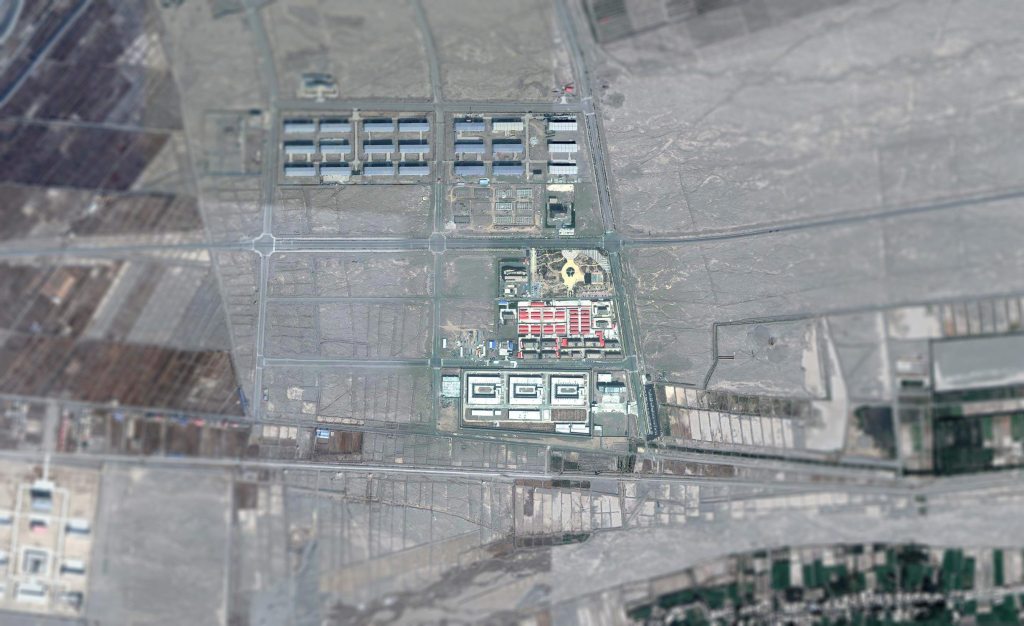
However, even if China refuses to acknowledge the benefits of religious freedom, the way China suppresses religion is simply inhumane. Xinjiang re-education camps in China are built to re-educate Muslims and push them to become an army of workers for factories. A New York Times article entitled Inside China’s Push to Turn Muslim Minorities Into an Army of Workers by Buckley and Ramzy says that over one million Muslims are detained in these mass detention camps. Although China claims that these camps are voluntary, they are not. According to the Gulf Daily News, Muslims in these camps are tortured while being denied basic rights such as prayer and contact with their families In addition, an article by BBC News entitled I Spent Seven Days of Hell in Chinese Camps explains that some leaked Chinese documents have orders to not allow escapes, promote confession, increase punishments, and more. In another article by BBC News called Data Leak Reveals How China ‘Brainwashes’ Uighurs in Prison Camps, Abdurasulov writes about a man named Orynbek Koksybek who spent several months in these camps. He suffered harsh punishments, such as being handcuffed, thrown into a pit, and doused with water. Koksybek said, “In Chinese they call it re-education camps to teach people but if they wanted to educate, why do they handcuff people?” Evidently, the denial of basic rights, the harsh punishments, and the lack of consent makes these camps inhumane.

In Denied the Right to Care: In South Carolina, ‘Religious Freedom’ Has Become a Vehicle for Discrimination from The Humanist magazine, Rob Boston writes about a Catholic woman in South Carolina that was denied the right to volunteer in Miracle Hill (a foster care organization) because she was a Catholic, not Protestant. When the officials of Miracle Hill asked for the right to continue only allowing Protestants to volunteer, it was granted under religious freedom. This supports the argument that people may use religious freedom as an excuse to discriminate. This, however, is not true. Situations like this happen under a corrupt definition of religious freedom, which defeats its own purpose. Religious freedom is the right for everyone to believe what they believe without fear of discrimination. If one discriminates against others under religion, it defeats the entire purpose of religious freedom. In fact, Religious Freedom and Discrimination speaks about how religious freedom will only function in a society that is open to toleration and mutual respect. True religious freedom is one that fends against inequity. In order for a government to ensure that true freedom of religion is established, they must put limits to it, banning further prejudice and actions that harm others. Therefore, the right thing to do in the situation of the Catholic woman is to not allow her to be denied as a volunteer. The right thing to do is to avoid discrimination altogether.
Religious freedom is a fundamental human right that benefits all people. China must acknowledge that because what they are currently doing to Muslims and underground Christians churches in China shows that they do not recognize the right of religious freedom. China’s religious oppression must be put to a stop because their mistreatment of Christians and Muslims is simply inhumane. Humans should all have the right to practice any religion they would like to practice.
Works Cited
Abdurasulov, Abdujalil. “Uighur Crackdown: ‘I Spent Seven Days of Hell in Chinese Camps’.” BBC News, BBC, 12 Feb. 2019, www.bbc.com/news/world-asia-47157111.
BibleGateway. Gospel Communications International, 1993.
Boston, Rob. “Denied the Right to Care: In South Carolina, ‘Religious Freedom’ Has Become a Vehicle for Discrimination.” The Humanist, no. 3, 2019, p. 34. EBSCOhost, search.ebscohost.com/login.aspx?direct=true&db=edsgis&AN=edsgcl.585800558&site=eds-live.
Buckley, Chris, and Ramzy, Austin. “Inside China’s Push to Turn Muslim Minorities Into an Army of Workers.” The New York Times, The New York Times, 30 Dec. 2019, www.nytimes.com/2019/12/30/world/asia/china-xinjiang-muslims-labor.html.
“Concern over Persecution of Uighur Muslims in China.” Gulf Daily News (Manama, Bahrain), 2020. EBSCOhost, search.ebscohost.com/login.aspx?direct=true&db=edsgit&AN=edsgit.A610338067&site=eds-live.
“Data Leak Reveals How China ‘Brainwashes’ Uighurs in Prison Camps.” BBC News, BBC, 24 Nov. 2019, www.bbc.com/news/world-asia-china-50511063.
Healey, Justin. Religious Freedom and Discrimination. Spinney Press, 2015. EBSCOhost, search.ebscohost.com/login.aspx?direct=true&db=e862xna&AN=929410&site=eds-liv
Hernández, Javier C. “As China Cracks Down on Churches, Christians Declare ‘We Will Not Forfeit Our Faith’.” The New York Times, The New York Times, 25 Dec. 2018, www.nytimes.com/2018/12/25/world/asia/china-christmas-church-crackdown.html.
Staničić, Frane. “Does Religious Freedom Warrant Protection as a Fundamental Human Right? ; Zahtijeva Li Vjerska Sloboda Zaštitu Kao Temeljno Ljudsko Pravo?,” 2019. http://search.ebscohost.com/login.aspx?direct=true&db=edsbas&AN=edsbas.D3BD9AC7&site=eds-live.
Reflection:
This essay was very intimidating to write. I didn’t like the thought of having to write a full on research essay with MLA formatting and citations. I also spent a long time just trying to research for this topic and organizing my thoughts into coherent themes and arguments. If you look through my rough draft, there’s a lot of planning that goes into it. However, once I got my thoughts down onto paper and finally into paragraphs, it was very satisfying to just see all my thoughts and beliefs and all my notes put into something that people could understand, for a cause that I believed as true. Overall, this essay was a very challenging one to write, but it was definitely a positive learning experience.
 Sum Yiu's College Writing Blog
yes! There are 33 pages in your original paper with all the drafts and peer editing and brainstorm and outline. You put a ton of work into this and it’s fascinating to read the final product and look back at all the work behind it. Nicely done!
LikeLike
This essay is amazing. Not only is it informational but impactful as well. I can really see the passion and deep knowledge that is crammed into this piece of writing. What really mattered was the fact that you stated your own opinion and broke down the reason why you believe in that. This truly an impactful piece of writing. Well done!
LikeLike